
In the afternoon of Southeast Asia, the sultry air seemed to have solidified, and a sudden thunderstorm was brewing. Mrs. Rani of Jakarta walked into the living room and gently pressed the switch of the stereo. A soothing Indonesian folk song, “Bengawan Solo,” slowly emerged, as if instantly injecting a cool stream into the sweltering room. This was not merely background music – it was a secret recipe against tropical lethargy, a “thermostat” for the family space.
In Southeast Asia, home audio systems are far from being mere luxury entertainment devices; they are cultural organs deeply integrated into the fabric of daily life. From the apartments of Manila to the stilt houses of Bangkok, from the narrow alleys of Hanoi to the high-rise buildings of Kuala Lumpur, audio systems are meeting the multi-dimensional needs of families in this region in unique ways.
The Sound Weaver of Open Spaces
Traditional buildings in Southeast Asia tend to adopt designs that are ventilated and open. The high ceilings, wide corridors, and fluid spatial boundaries between indoors and outdoors are smart solutions to deal with the hot climate. However, this “wall-less culture” poses challenges for sound management – sounds tend to dissipate and there is a lack of privacy. Modern intelligent audio systems ingeniously resolve this contradiction.
With multi-room audio technology, households in Singapore’s public housing estates can listen to the morning news in the kitchen while preparing coconut rice, and play soft lullabies for their children in the bedroom at the same time. In condominiums in Bangkok, directional speakers ensure that music at outdoor dinners does not disturb students studying in the neighboring rooms. Audio has become the spatial architect for families in Southeast Asia, using sound instead of brick walls to divide areas with different functions.
A spiritual oasis in a hot and humid climate
The humid and hot climate in Southeast Asia not only tests the body but also wears down the spirit. The continuous high temperature and humidity make people feel drowsy, and the low pressure before the afternoon thunderstorms is more likely to trigger irritability. At such times, the audio system becomes the “emotional regulator” of the family atmosphere.
Research shows that specific frequencies of music can affect a person’s perception of body temperature. Families in Bali discovered that playing the crisp metallic percussion of gamelan music can bring a psychological feeling of coolness. Malaysian Chinese families prefer to play classical music featuring a duet of erhu and flute on hot afternoons. The melodious strings and the clear tones of the wind instruments seem to be able to disperse the stickiness in the air.
A teacher from Ho Chi Minh City shared: “When we couldn’t go out for several consecutive days during the rainy season, the whole family gathered around the radio to listen to the songs from the golden age of Saigon and danced along to the music. The radio released the energy that was trapped by the weather.”
The tempo of social culture
“Rumah terbuka” (Open House) is a traditional practice during the Eid al-Fitr in Malaysia, while the “Barangay” spirit in the Philippines emphasizes community closeness. The core of Southeast Asian social gatherings unfolds in the family space, and music has always been the rhythm of these gatherings.
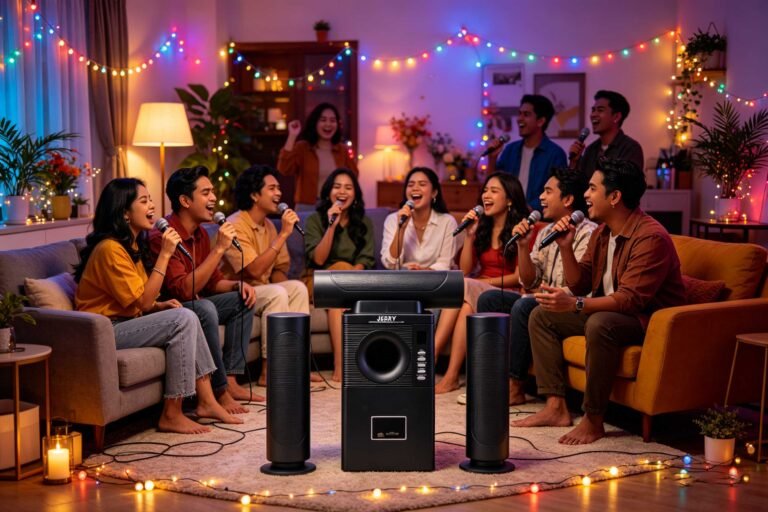
At family barbecue parties in Indonesia, the strong rhythm of Dangdut music can quickly warm up the gathering; during family celebrations for the Thai New Year (Songkran), the blending of traditional and popular music is played, respecting the preferences of elders while allowing young people to dance freely; at the Mid-Autumn Festival party of Vietnamese families, nursery rhymes alternate with modern songs, and the sound system becomes a bridge connecting different generations.
More importantly, the audio system now supports multi-device connection, allowing each family member to contribute their own playlist. This democratization of music selection means that the narrative of sound during family gatherings is no longer dominated by the elders, but becomes a symphony of diverse voices.
Box for Spiritual Resonance of Multiple Beliefs
Southeast Asia is one of the regions with the greatest religious diversity in the world. A family may consist of members who follow Buddhism, Islam, Christianity or traditional animist beliefs. The audio system respects this diversity in a non-intrusive manner.
In the early morning, the soft sound of the Adhan (call to prayer) is played through the speakers, without disturbing the sleeping family members. In the afternoon, the chanting of Buddhist sutras creates an atmosphere for meditation. On Sunday mornings, Christian hymns bring spiritual comfort. With the same set of equipment, through a carefully arranged playlist, it becomes a symbol of family religious inclusiveness.
In a multi-religious family in Yogyakarta, Indonesia, the audio system plays spiritual music of different faiths every day. The parents tell their children, “Although these sounds are different, they all express the pursuit of goodness and beauty.” The audio system has become a gentle tool for religious education.
The voiceprint bond of a separated family
Southeast Asia is a significant region for global migration, with numerous cross-border separated families. Audio technology is redefining “family reunification”.
The overseas Filipino families use the “voice message” function of smart speakers to tell bedtime stories to their children back home; Malaysian workers in Singapore use the multi-room audio system on weekends to listen to the same radio program simultaneously with their parents back in their hometown, creating a “virtual coexistence” experience.
What is even more touching is that many families use high-quality audio recording equipment to record traditional songs sung by their ancestors, the laughter during family gatherings, and the unique sound scenes of festivals. These “family sounds” are reproduced through speakers in daily life, becoming emotional anchors for separated families.
Modern troubadours of identity inheritance
Southeast Asia is undergoing rapid modernization, and traditional music is facing challenges in its survival. Home audio systems have become the modern carriers for cultural transmission.
In Thai families’ playlists, there are both the songs of pop icon BamBam and ancient Mor Lam folk songs; while Burmese families listen to K-pop, they also enjoy solo performances on the traditional saung (a type of musical instrument). This juxtaposition is not contradictory at all; instead, it creates a unique cultural identity – being able to dance globally while also understanding local rhythms.
Many families are more consciously using audio equipment for cultural education. Parents will explain to their children the poetic rhythm in the “Dikir Barat” of Malaysia, or analyze the Portuguese influence in the “Keroncong” music of Indonesia. Audio equipment has become the key to opening up cultural dialogues.
The voice of technological equality and democracy
With the widespread adoption of streaming services and the affordability of audio equipment, families in Southeast Asia are experiencing a “democratization of sound”. Previously, professional music production and high-end audio equipment were the exclusive privileges of urban elites; nowadays, ordinary families can also enjoy high-quality music.
In rural Vietnam, families enjoy global music through affordable Bluetooth speakers; in the streets of Cambodia, street vendors play their adapted traditional songs through portable audio systems; in Indonesia, independent musicians produce albums using home recording equipment and then share them through speakers in their communities. This form of audio democracy not only enriches family entertainment but also transforms ordinary people from passive music consumers to active cultural participants.
From combating natural climate conditions to regulating family emotions, from maintaining social bonds to passing on cultural identities, the role of audio equipment in Southeast Asian families goes far beyond that of a simple playback device. It is a blend of technology and human emotion, a dialogue between tradition and modernity, and a boundary between private space and public domain.
As night falls in the tropics, thousands of lights come on, and the melodies wafting from countless households – whether they are Malay folk songs, Thai pop music, Vietnamese cover songs or Western classics – together form a unique sound landscape of Southeast Asia. These sounds emanating from household audio systems are not just entertainment; they are also carriers of life memories, expressions of cultural identity, and channels for emotional connections.
In this digital age, Southeast Asian families may continue to transform the form of their audio equipment, but the core need remains unchanged: in a changing world, to create a place within the home where one can identify with through sound recognition and be united by melodies.
🎁 Act immediately and embark on your panoramic sound journey:
- We can offer:
- ✔ Localization services – providing after-sales support to ensure trouble-free use.
- ✔ High value for money – more affordable than international brands, with no compromise on quality.
- ✔ Energy-saving and power-efficient – low power consumption design, saving electricity costs.\
- Limited-time offer! Hurry up and snap it up now!
- 🔥 Buy now and enjoy free delivery + 1-year warranty!
- 🔥 The first 100 customers will receive high-quality audio cables for free!
- 📞 Contact Us: 13751813264

 English
  Afrikaans
  Arabic
  German
  Spanish
  French
  Russian